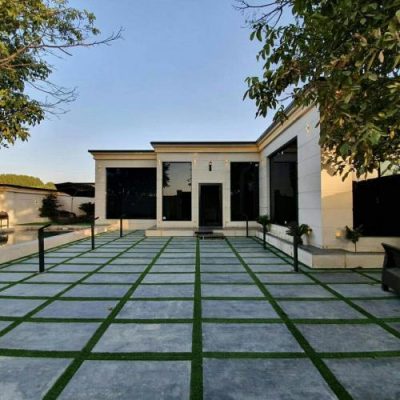
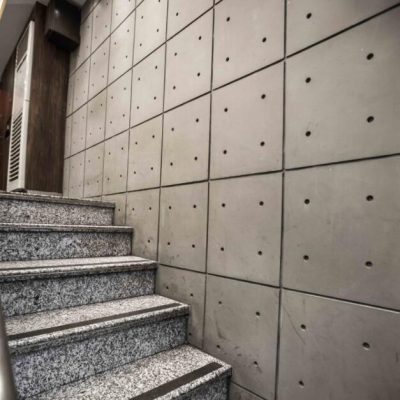
Exposed Concrete
Exposed concrete, or facade concrete, is one of the modern and widely used building materials in contemporary architecture, which is used in various parts of buildings due to its raw and industrial appearance, high durability, and diverse design capabilities.
Unlike concrete covered with final coatings, this type of concrete remains visible and displays its inherent beauty and natural texture.
Below, we will examine this material in detail in two parts: flooring and facade.
Exposed Concrete in Flooring
Exposed concrete in flooring is known as a smooth, polished, and uniform surface, which is often created using specific techniques such as precise troweling, polishing, or the use of smooth molds.
This type of flooring has a minimal and industrial appearance and, in addition, has very high mechanical resistance.
Exposed concrete floors usually have the right thickness, can be installed quickly, and have regular expansion joints that help control cracking.
Advantages
High durability and strength: Exposed concrete floors are highly resistant to pressure, abrasion, and impact.
This feature makes them very practical in high-traffic areas such as airports, shopping malls, factories, and warehouses.
Easy maintenance: Due to their smooth and impermeable surface, dust and dirt can be easily cleaned.
Even if they get stained, they can be cleaned using ordinary detergents.
Unique and modern appearance: Using exposed concrete on the floor creates a sense of industrial and neutral space that is very popular in modern decorations.
Thermal and acoustic insulation: With the use of special additives and appropriate techniques, this flooring can provide good thermal and acoustic performance.
This feature is important in areas such as conference halls or residential units.
Applications
Shopping malls and stores: Flooring resistant to high traffic, and creating a modern look.
Parking lots and industrial spaces: Withstand the weight of cars and heavy machinery, without causing cracks or premature failure.
Modern residential spaces: Especially in homes with industrial or minimal interior design.
Landscaping and open spaces: Sidewalks, squares, and public areas that require high durability.
Examples
Flooring of chain stores such as IKEA or DECATHLON: Use of exposed concrete due to the need for a durable floor that is in harmony with modern design.
Multi-storey car parks of shopping malls: Due to high resistance to oil, chemicals, and heavy loads.
Urban landscaping such as squares or park sidewalks: For beauty, durability, and ease of maintenance.
Exposed concrete in facades
In the application of building facades, exposed concrete plays both a structural and aesthetic role.
The concrete surface is directly exposed to the eye without any additional coating or painting.
The forms used to implement the facade can create specific designs, textures or shapes on the concrete surface.
It is also possible to combine natural colors using additives or combine with materials such as wood and metal.
Advantages
Visual appeal: Exposed concrete offers a look of the honesty of the materials, modernity and inherent beauty of the material.
This type of facade is very compatible with minimalist, modern and even industrial architecture.
High durability and resistance: Exposed concrete is highly resistant to temperature changes, UV radiation, heavy rainfall, frost and environmental erosion.
It also has much lower maintenance costs than stone or composite facades.
Environmental sustainability: By eliminating the need for artificial facades, painting or chemical coatings, the use of exposed concrete is effective in reducing pollutants and waste production.
Flexibility in design: Using special molds, facades with geometric lines, embossed or simple designs can be created.
It is also possible to use fibers, pigments or additives.
Applications
Exterior facades of residential, commercial, educational and cultural buildings: Creating a sustainable, beautiful and different facade.
Interior walls with modern design: For spaces such as offices, galleries or art spaces that are looking for a special and neutral look.
Landscaping elements such as concrete benches, decorative walls, water features: Beauty and strength in open environments.
Artistic structures and sculptures: The malleability of concrete makes it possible to implement special forms in works of art.
Examples
Facade of the Google office building in London: Using exposed concrete to harmonize with the industrial design of the space.
Zaha Hadid Art Gallery in Vienna: Combining curved and smooth lines with exposed concrete to create a dynamic space.
Urban furniture in Mellat Park, Tehran: Using exposed concrete to create curved and sturdy benches.
Exposed concrete, as a modern and multipurpose material, is used in various parts of buildings, including flooring and facades.
Features such as high durability, easy maintenance, unique appearance, extensive design capabilities, and environmental sustainability have made it an ideal choice for architects and designers.
By using exposed concrete, modern, industrial, yet beautiful, durable, and functional spaces can be created.