
Polyurethane

Product description

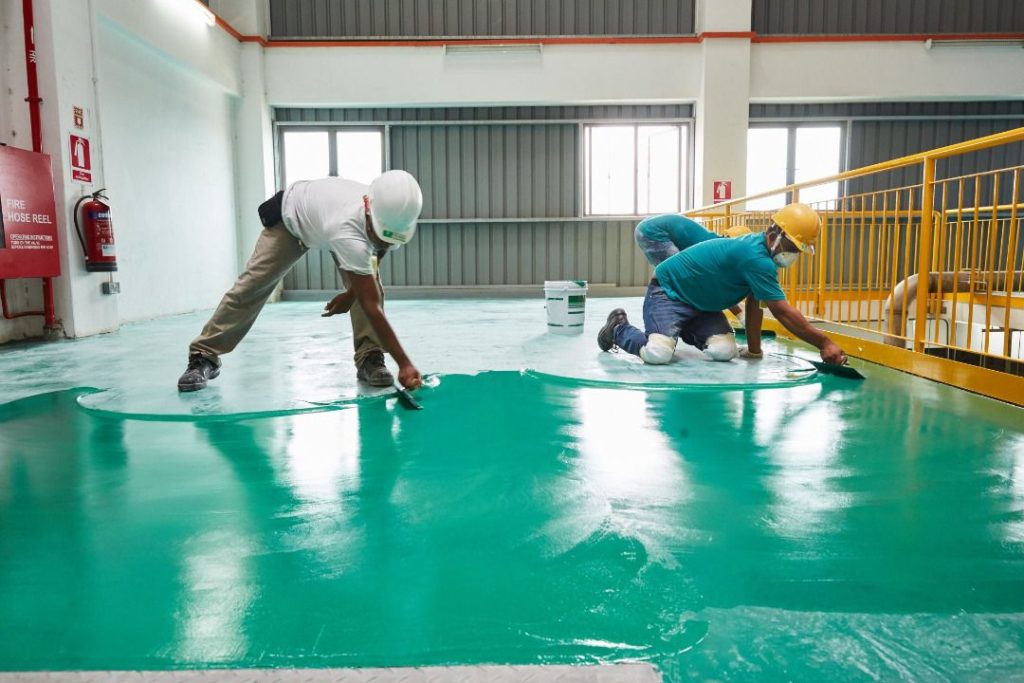
Epoxy flooring is a unique flooring material that has been steadily gaining popularity. Once the concrete floor is leveled and prepared, a resin and a hardening chemical are mixed together. The mixture is then poured onto the concrete and allowed to harden before a second or third coat is applied. This liquid-to-solid process gives epoxy flooring the ability to resist stains, etc. Its most popular applications are in hospitals, schools, garages and industrial environments. But it can be just as useful for residential living rooms, kitchens or other rooms.
DAA9D981D9BED988D8B4 D8A7D9BED988DAA9 002

Applications

  • Molding and modeling of industrial parts, making molds and mold mothers
  • Reinforcement and backing of models with glass fibers or mineral fillers
  • For making sensitive muscles and models in the molding and casting industry
  • Part making resin for producing parts by casting method
  • For making composite and fiberglass parts

Features

  • The use of aliphatic epoxy has increased the toughness and flexibility properties of the product.
  • The low viscosity of the product has enabled its use alongside reinforcing fibers (glass, carbon, etc.) as well as mineral powders (silica, etc.).
  • Good mechanical properties, 100% copyability, and machinability make it possible to use it for molding and modeling, as well as copying various industrial parts, without the resulting mold becoming complex and changing shape.

Applications

  • Molding and modeling of industrial parts, making molds and mold mothers
  • Reinforcement and backing of models with glass fibers or mineral fillers
  • For making sensitive muscles and models in the molding and casting industry
  • Part making resin for producing parts by casting method
  • For making composite and fiberglass parts
  •  

Features

  • The use of aliphatic epoxy has increased the toughness and flexibility properties of the product.
  • The low viscosity of the product has enabled its use alongside reinforcing fibers (glass, carbon, etc.) as well as mineral powders (silica, etc.).
  • Good mechanical properties, 100% copyability, and machinability make it possible to use it for molding and modeling, as well as copying various industrial parts, without the resulting mold becoming complex and changing shape.